A systemised business runs on documented processes, not heroics.
So the moment you hire a "superstar who does their own thing", things tend to get worse, not better. Your new rockstar works around the checklist. Your onboarding video goes unwatched. Your best salesperson decides the CRM is beneath them. Six months later, you're the one cleaning up the mess.
Here's the thing. If you've done the hard work of documenting your core systems, the next job is making sure the people operating those systems actually want to operate them. Not tolerate them. Not work around them. Want them.
That changes who you hire. It changes the questions you ask. And it changes how you define an A-player.
Let me show you what to actually look for.
The one trait that matters most
Willingness to follow a documented process.
Not talent. Not creativity. Not experience. Willingness.
It sounds almost too obvious. But most small business owners hire for the opposite. They hire the experienced candidate who "can hit the ground running" and then get frustrated when that person refuses to follow the SOP because "they've always done it their way".
If your business runs on systems, the single most important thing you can screen for is whether the person in front of you respects process. Everything else can be taught. That one cannot.
I cover this in depth in Systems Champion, but the principle is simple: the easiest way to get your team to follow systems is to hire people who already like following systems.
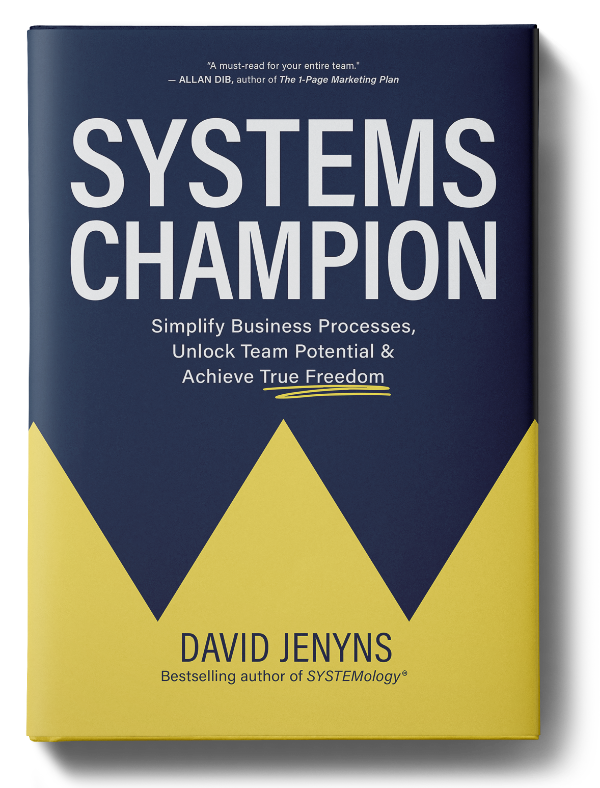
Learn more →
5 traits to look for in every hire
When you're building a team to run inside documented processes, here are the five signals worth weighting heavier than anything on the resume.
Five traits to screen for in every candidate you interview.
- Systems orientation. Before doing a task, they ask, "Is there a process for this?" They default to structure, not improvisation.
- Detail comfort. They can follow a 12-step checklist without shortcutting steps 4 and 7 because "they're obvious".
- Feedback friendly. When a system is broken or outdated, they flag it. They don't just quietly work around it.
- Teachable. They watch the onboarding video. They read the SOP before asking questions. They take notes.
- Quiet contribution. They improve the system rather than trying to be the hero. They're chasing results, not credit.
Rule of thumb: if a candidate hits four of these five, interview them again. If they hit all five, hire.
Systems orientation. Before doing a task, they ask, "Is there a process for this?" They default to structure, not improvisation. When you show them an SOP, their face lights up instead of falling flat.
Detail comfort. They can follow a 12-step checklist without shortcutting steps 4 and 7 because "they're obvious". Bookkeepers, paralegals, nurses, flight attendants. These are the archetypes. They've trained themselves to care about the boring bits.
Feedback friendly. When a system is broken or outdated, they flag it through the proper channel. They don't just quietly work around it. This is the difference between an employee who makes your systems stronger over time and one who lets them rot.
Teachable. They watch the onboarding video. They read the SOP before asking questions. They take notes. If your training library is the gym, they actually show up.
Quiet contribution. They improve the system rather than trying to be the hero. They're not chasing credit. They're chasing results. You'll know one when you see one: they're the team member who makes everyone around them better without anyone noticing for months.
4 red flags that should kill a candidate
There are warning signs that almost always end badly. Learn to spot them early.
"I prefer to do things my own way." Even when it's framed as "creativity" or "ownership", this is almost always code for "I will ignore your systems and you'll find out six months from now". Be careful. The more senior the candidate, the more elegantly they'll phrase this.
"I don't really read SOPs." If they admit this in the interview, they're telling you exactly what will happen on day 30. Thank them for their honesty. Move on.
Resume shows short tenures at startups where "there was no process". Three companies in three years, each one a messy, fast-paced scale-up. That's fine for some businesses. It's a terrible fit for yours. They've been trained to thrive in chaos. Your company is not chaos.
Pushback when shown a documented process during the interview. I recommend showing candidates a real SOP from your business and asking them to talk through it. The good ones ask clarifying questions, suggest improvements, and get curious. The wrong ones visibly deflate or start explaining why they wouldn't need it.
None of these red flags make someone a bad person. They just make them the wrong person for a systemised business.
The interview questions that reveal systems fit
Most interview questions test whether someone is likeable. Almost none test whether they'll thrive inside a documented process. Here are four that do.
"Tell me about the last time you followed a documented process that you didn't love. What did you do?"
Listen for: did they follow it anyway and flag improvements through the proper channel? Or did they just do their own thing and hope nobody noticed? That's the whole interview right there.
"If I showed you our onboarding SOP right now, what's the first thing you'd look at?"
The right answer involves structure. Steps, flow, outcomes, who owns what. The wrong answer is a blank stare.
"Describe a system you improved at a previous job. How did you get the change approved?"
Two signals in one question. Can they spot improvements? And can they work inside the existing system to make changes, instead of just going rogue? You want both.
"How comfortable are you with video onboarding materials?"
Because that's how your business trains new hires. If they say, "I'd rather have someone walk me through it", you've just discovered they'll be a drain on whoever has to do that walking. Every time. Forever.
Ask these four questions. Add your own. But make sure at least half your interview is testing for systems fit, not just likeability.
What about A-players and superstars
This is where a lot of owners get confused.
A-players are valuable. I'm not arguing otherwise. But an A-player inside a systemised business looks different than an A-player inside a chaotic one.
In a chaotic business, the A-player is the person who holds it all together. The one who remembers where every client document is, who knows the pricing rules in their head, who personally writes every proposal because nobody else can do it right. They're indispensable. That's what makes them an A-player.
They're also a single point of failure. The day they leave, quit, get sick, or get poached, your business loses 20% of its capacity overnight.
The right A-player for a systemised business is the opposite. They make the systems better, not themselves indispensable. They take the messy process you inherited and turn it into a clean one. They document their expertise so that the next person in the seat is 70% as effective on day one. They build up the business, not their own kingdom inside it.
Hire A-players who love leverage. Avoid A-players who love being the hero.
If you've read people are your most important business system, this is the tactical follow-up. The philosophical case for combining great systems with great people is one thing. Actually screening for that combination in a 45-minute interview is another.
Case study: Trevor Henselwood, WebSavvy
Trevor Henselwood runs WebSavvy, a digital marketing agency specialising in Google and Facebook advertising. Like most growing agencies, he hit the wall that comes when the business can't function without the founder.
Trevor enrolled in the SYSTEMology Concierge program and mapped out the agency's core processes: client onboarding, campaign management, reporting, the whole flow. That part of the story is common. The more interesting part is what happened to his hiring.
Before systemising, WebSavvy hired the way most digital agencies hire. Find the smart marketer. Throw them in the deep end. Hope they figure it out. Some did. Most didn't. The ones who stayed tended to be the ones who "did things their own way", which meant Trevor had no consistency across client accounts and couldn't scale without inheriting more chaos.
After systemising, the hiring criteria changed. Instead of looking for rockstar marketers, they started looking for people who could follow the documented agency methodology and, crucially, suggest improvements when something wasn't working. The interview process shifted from "impress me" to "show me how you think about process".
The result? New hires became productive in weeks instead of months. The quality of client work stopped depending on which account manager happened to be on the job. And Trevor finally stepped out of the day-to-day, because the business was no longer dependent on him.
That's the point of hiring for systems fit. You're not building a roster of individual superstars. You're building a team that makes your systems stronger every quarter.
The Systems Champion as your hiring advisor
Here's a small shift that changes a lot.
Don't run hiring interviews alone. Have your Systems Champion sit in.
Your Systems Champion is the person in your business who owns the documentation, the process library, and the continuous improvement loop. They live inside your systems every day. Which means they know exactly what the new hire will be operating inside.
They'll spot systems-incompatible candidates faster than you will. You'll be charmed by the candidate's energy and experience. Your Systems Champion will notice the small tell: the raised eyebrow when they see the SOP, the dismissive "oh yeah I'd just do it my way" comment, the glazed look during the process walkthrough.
For senior hires especially, your Systems Champion should have veto power. Not final-say power, but veto power. If they look at you after an interview and say, "This person will never follow our documentation", believe them. That's not ego. That's experience.
A quick note on job descriptions and ads
If you want to attract systems-minded candidates, your job ad needs to signal that you're a systems-minded business.
The old way: "Seeking motivated self-starter with strong attention to detail."
The new way: "You'll follow our documented content creation process, including our social media posting schedule, brand guidelines, and quality control checklists. You'll also be expected to suggest improvements to these processes over time."
The second version scares off the wrong people and attracts the right ones. That's the whole game. Filter early, hard, and on purpose.
For a deeper treatment, I wrote a full piece on results-oriented job descriptions that pairs nicely with this one. It's also worth understanding the employee discretion vs systems trade-off, because that's the exact boundary you're screening for in an interview.
The bottom line
Hire for systems fit first. Talent second.
A great system with a B-player beats a bad system with an A-player, every single time. That's not a shot at A-players. It's a fact about leverage. Your systems multiply whoever uses them. So the question isn't "how brilliant is this candidate". It's "will this candidate make my systems stronger, weaker, or irrelevant".
If you've done the hard work of documenting what a business system is and how yours run, don't hand those systems to someone who won't respect them. Hire the person who reads the SOP before the first day. Who asks "what's the process for this?" before improvising. Who makes the checklist better instead of ignoring it.
That's the person who scales your business without scaling your stress.
Ready to build a team that thrives inside your systems? Your systems are only as strong as the people who use them. systemHUB gives you one place to build, store, and share every process in your business, so your next hire has a clear playbook from day one.