Here's the thing about the old advice that "people are the most important system component". It's almost right.
Ron Carroll said it. Jim Collins said it louder with his "right people on the bus" line. And for a long time, it was gospel. Hire great people, the thinking went, and everything else takes care of itself.
I'd push back. Gently, but firmly.
The right people, without documented systems, will still leave you stuck. They'll build silos, keep knowledge in their heads, and the minute one of them walks out the door, a chunk of your business walks with them.
The right people IN documented systems? That's the combination that turns ordinary teams into extraordinary businesses. Neither works alone.
The "people vs systems" false choice
Most business owners fall into one of two traps.
Trap one: they chase A-players. They believe hiring the best will solve their operational pain. So they pay over the odds for an "ops manager", a "superstar" salesperson, a "unicorn" marketer. And for a while, it looks like it works.
Then the superstar leaves. Or burns out. Or asks for a raise that scares you. And you realise the business was quietly dependent on that one human brain the whole time.
Trap two: they build systems and expect mediocre hires to deliver. They download templates, document SOPs, buy the software. But nobody follows any of it because the team doesn't feel ownership. Or the systems were written once and never updated. Or the culture says "systems are for juniors, real pros don't need them".
Both traps fail for the same reason. They treat people and systems as an either/or decision.
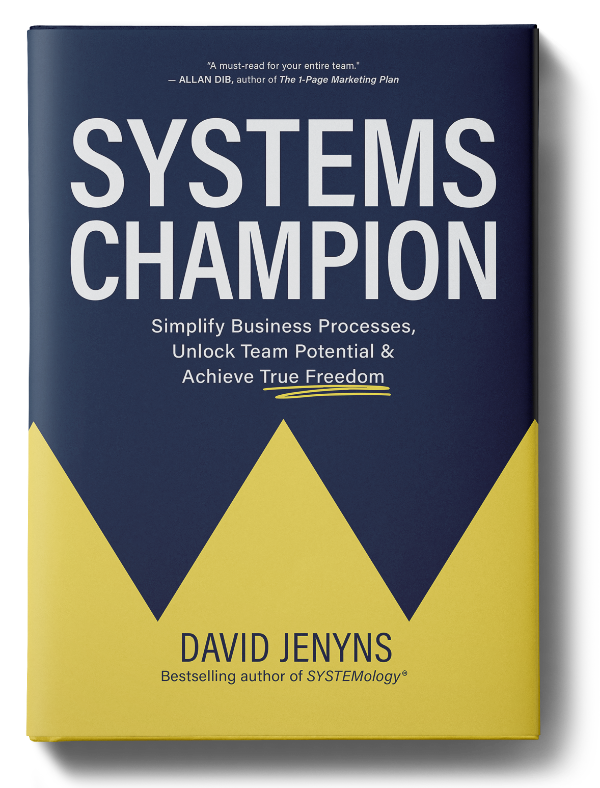
The winning combination is different. You need good-enough people. You need well-documented systems. And you need someone on the team whose job is to drive the adoption of those systems. We call that person the Systems Champion.
Get those three things right, and the business starts to scale.
Why ordinary people + good systems beats superstars without them
Let's talk about McDonald's for a moment.
McDonald's is not famous for hiring the best chefs. In fact, most of its kitchen staff have never cooked professionally before they started. And yet McDonald's serves 69 million customers a day, in 100 countries, with remarkable consistency.
How? The system does the heavy lifting. The people execute it.
Compare that to most chef-owned restaurants. Brilliant food. One genius in the kitchen. Zero ability to scale, because the whole business lives in that one person's hands.
This isn't a knock on great chefs. It's a knock on a business model that depends entirely on one brain. A superstar who leaves takes their knowledge with them. An ordinary person following a documented playbook produces consistent results, week after week, hire after hire.
I saw this in my own business. When I was running Melbourne SEO Services, I didn't need the world's best SEO experts. I needed to document how my best people worked, so the next hire could follow the same playbook.
That shift changed everything. New hires stopped needing six months of mentoring. They got a documented process, clear outcomes, and a set of templates. They were productive in weeks, not quarters.
Without the systems, I would have needed to hire a rockstar every time. With the systems, I could hire good, trainable people and turn them into consistent performers.
That's the core idea behind what a business system is: a documented way of doing something so the result doesn't depend on one specific person.
The Systems Champion is your most important hire
Here's the counter-intuitive bit. The most important person you can bring on board isn't the CEO. It isn't the ops manager. It isn't the sales leader.
It's the Systems Champion.
The Systems Champion is the person who captures knowledge, drives adoption, and keeps systems alive. They're the bridge between the vision of a systemised business and the practical reality of making it happen. While the owner focuses on growth, the Systems Champion builds the foundations.
And the kicker: they don't need prior experience. They need the right mindset.
Learn more →
Take Kaleb at Lime Therapy. Renee and Matt Kelly run a 40-person allied health practice. When they committed to systemising the business, they didn't go outside and recruit a senior ops manager with 20 years of experience. They looked at their existing team and tapped Kaleb.
A two-year occupational therapist. No business background. No systems experience.
What he had was the right mindset. Organised, detail-oriented, curious, and respected by the team. They gave him dedicated time, backed him up, and put him through the Systems Champion Academy.
Within months, he'd documented the core processes, rolled out systemHUB, and cut invoicing time by 10x. The team started coming to him with ideas for new systems. Culture shifted. Systems became part of the company's DNA.

Sandra and Abby at Taking Care Mobile Massage tell a similar story. Sandra had built the business from nothing, but everything was paper-based and lived in her head. When the pandemic hit, her daughter Abby stepped in as the Systems Champion. No corporate background. Just the right mindset, and a mandate to document what mum knew.
Abby captured the key processes, got the team following them, and Sandra was able to step back from daily operations. The business is now scaling toward an exit.
Same pattern. Right person, right role, inside good systems.
Hiring FOR systems, not despite them
Once you accept that ordinary people plus great systems beats superstars without them, your hiring playbook has to change.
Good systems make hiring dramatically easier. A new hire walks in on day one, gets handed the documented process, and starts delivering. You're not gambling on whether they'll "figure it out". You're training them on a proven playbook.
Bad systems make hiring a gamble. You hope they're smart. You hope they ask good questions. You hope they stay long enough to become useful. And when they leave, you're back to square one.
So interview for systems fit, not just skill fit.
Ask candidates things like: "How comfortable are you following a documented process?" "Tell me about a time you had to learn a new process quickly." "What's your view on doing something a specific way, even if you'd prefer a different approach?"
Watch for the red flag candidates. The ones who immediately tell you they "do things their own way". The ones who need to "make the role their own" before they've even learned yours. The ones who bristle at the idea of documentation.
These might be great people in the right environment. But they're not the right fit for a business that's trying to systemise. You want team members who see documented systems as a gift, not a cage.
Done well, systems accelerate onboarding, reduce training cost, and make the hire feel productive faster. That's a better candidate experience, not a worse one.
Creating a culture where people love systems
Here's a truth most business owners miss. Teams don't resist systems because they dislike order. They resist poorly documented systems that get dumped on them from above with no input and no updates.
Good systems empower. They give clear expectations, defined outcomes, and freedom within the framework. The team knows what winning looks like. They know who owns what. They know where to check when they're unsure.
Bad systems suffocate. They're out of date. They're written by someone who hasn't done the job in years. They don't match reality. No wonder nobody follows them.
A few things make systems stick with a team:
- Make the team part of building them. The person doing the job should be the one documenting it. Ownership drives adoption.
- Let the team improve them. Systems aren't set in stone. Good ones evolve. Make it easy for anyone to suggest a change.
- Track progress visibly. What gets measured gets done. Celebrate when systems are completed or improved.
- Make it a little bit fun. Recognise wins. Tell stories. Highlight the Systems Champion's progress in team meetings.
When systems are built with the team, not forced on them, adoption takes care of itself. The whole thing stops feeling like compliance and starts feeling like craft.
This is also how you start to reduce owner dependency in a way that sticks. It's not about ripping authority away from the team. It's about giving them clearer rails to run on, so you can step out of the day-to-day.
The characteristics of good business systems all come back to this same idea: systems should make people's work easier, not harder.
The bottom line
People matter. Of course they matter. But not as superstars who hold everything together by willpower.
They matter as team members operating inside documented systems that amplify what they do. A good team with no systems will eventually fracture. A good system with no team is just a PDF gathering dust.
Right people + right systems = right outcomes.
If your business still depends on one or two heroes, you haven't got a business. You've got a very nice house of cards.
Start with one system. Pick the one causing you the most pain this week. Get the person closest to the work to document it. Then the next. Then the next.
And somewhere in that process, keep your eyes open for your Systems Champion. They're probably already on your team. If you want the full playbook on how to find them, build them, and empower them, how to systemise your business will walk you through it.
Systems are how freedom, scale, and legacy get built. People are how they come alive.
You need both.
People and culture are the third pillar of a systemised business. For the other two, Documentation and Tools, and how they stack with Culture, see The Three Pillars of a Systemised Business.
Ready to give your team the systems they deserve? systemHUB is the single place your team builds, stores, and runs every system in your business. It comes loaded with 100+ templates and is designed to make your Systems Champion's job easier from day one. Try it free.