Your job descriptions probably don't work.
Take a look at the last one you wrote. If it reads like a list of tasks ("answer the phone", "manage email", "handle enquiries"), you've written a task list. Not a job description.
Here's the thing. A task list tells someone what they'll do. A job description should tell them what they're responsible for delivering.
Those are two very different things. And when you flip from one to the other, almost everything about hiring gets easier.
Task-based vs results-based: the difference
Let me show you what I mean.
Task-based job description:
Answer the phone. Handle enquiries. Manage email. Greet visitors. File paperwork. Book meetings.
Results-based job description:
Create a 5-star first impression for every caller. Route enquiries to the right team member within 2 hours. Achieve 100% email acknowledgement within 24 hours. Make every visitor feel welcome and expected.
See the difference?
The first version describes activity. The second describes outcomes. The activity might be the same, but the intent behind it has completely changed.
The receptionist's "duty" is to answer the phone. Their real "responsibility" is to create a great first impression. That's the outcome the business needs. Everything else is just the mechanics of producing it.
Why this matters when you're hiring
Task lists attract people who want to do tasks. Outcome descriptions attract people who want to own results.
You want the second kind. Always.
When you write a job description around outcomes, two things happen during hiring. First, you scare off the wrong candidates. People who want a low-accountability gig don't apply for a role that holds them to measurable results. Good. You've saved yourself an interview.
Second, you attract people who already think in outcomes. They read your JD and think, "I can see exactly what success looks like in this role. I know what I'd be judged on. I'm in."
That's the mindset you want. Every time.
Why this matters when you're managing
Here's where results-oriented JDs really earn their keep.
Performance reviews stop being about personality. When someone owns an outcome ("100% email acknowledgement within 24 hours"), you either hit the number or you don't. No politics. No "I feel like Sarah isn't pulling her weight." Just the numbers.
When someone's falling short, the conversation is clearer too. You're not saying "I don't think you're a great fit." You're saying "here are the outcomes you committed to, here's where you are, let's talk about what needs to change."
That's a kinder, more honest conversation than the alternative.
How to write one (4 steps)
Here's the process I use.
Step 1. Identify the 3 to 5 outcomes this role is responsible for.
Not 15. Not 30. Three to five. If you can't boil the role down to five outcomes, the role probably needs to be split.
Step 2. Define what "success" looks like for each.
Add a metric. A target. A timeframe. Something that makes it measurable.
"Capture new systems" is vague. "Capture 2 new systems per month" is measurable. Guess which one holds up in a review.
Step 3. List the systems the person will follow to deliver those outcomes.
This is where SYSTEMology makes things practical. Every outcome is produced by following some kind of repeatable process. If you've documented your systems, you can point the new hire straight at them. They're not starting from scratch.
Step 4. Specify the capabilities needed to produce those outcomes.
Not a 40-item skills list. Three to five capabilities the person genuinely needs. Attention to detail. Comfort on the phone. Willingness to follow up. Keep it real.
Here's what that looks like in practice.
What outcomes does this role own? And how will we measure them?
Outcomes:
- Capture knowledge from team members into documented systems (minimum 2 new systems per month)
- Achieve 90% team adoption of documented systems within 60 days of publishing
- Drive measurable improvements to existing systems (e.g. time saved, error rate reduced)
- Maintain systemHUB as the single source of truth (zero outdated systems over 6 months old)
Candidate needs: detail orientation, curiosity about processes, willingness to follow up. NOT required: prior systems experience.
Connect job descriptions to your systems
This is the bit that usually gets missed.
A results-oriented JD without documented systems is still just a wish list. You're telling someone what outcomes to produce, but not how to produce them. That's a setup for frustration on both sides.
Here's the connection. Every role sits inside a department on your org chart. Each department has systems. The job description connects the person to the outcomes they own AND to the systems that produce those outcomes.
When someone joins the team, they don't have to reinvent the wheel. They don't have to guess how you want things done. They inherit a playbook and a set of targets. Their job is to execute.
That's when hiring gets easy. You're not hunting for a unicorn who already knows your business. You're hiring someone who can follow a proven process and own a clear outcome.
The Systems Champion: a results-oriented role in action
Let me show you how this works for one of the most important roles in any systemised business: the Systems Champion.
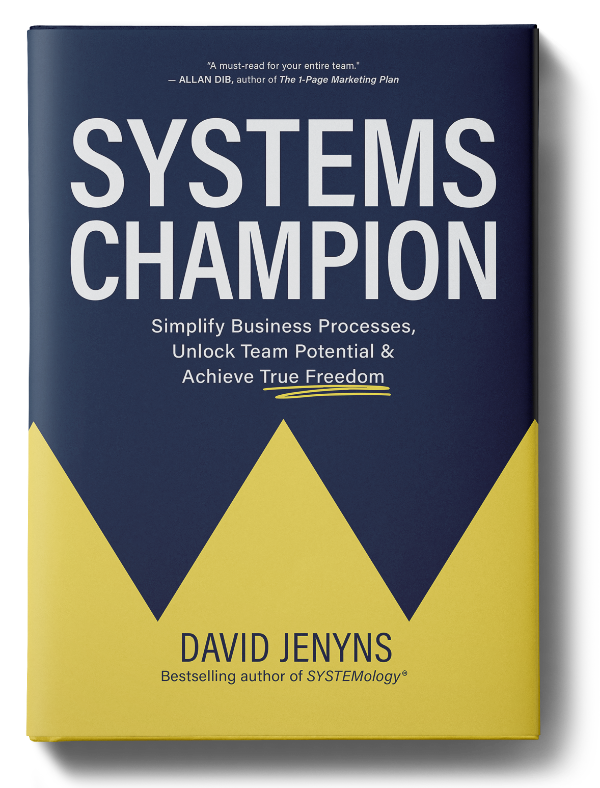
Learn more →
A vague, task-based version of this role might read: "Manage processes. Update documentation. Support the team."
Useless. Nobody knows what "manage processes" actually means. You can't measure it. You can't hire against it.
A results-oriented version defines the outcomes:
- Capture knowledge from team members into documented systems (minimum 2 new systems per month)
- Achieve 90% team adoption of documented systems within 60 days of publishing
- Drive measurable improvements to existing systems (time saved, error rate reduced)
- Maintain systemHUB as the single source of truth (zero outdated systems over 6 months old)
Now you know exactly what you're hiring for. You know what to ask in the interview. You know how to run the first performance review. You know what great looks like.
That clarity is the whole point.
Case study: Kaleb at Lime Therapy
Renee Kelly runs Lime Therapy, a multi-disciplinary allied health practice in regional Australia with around 40 staff. She's a visionary. Not a details person. The business grew fast, but without underlying systems it started to creak.
Renee needed a Systems Champion. She hired Kaleb.
Here's what's interesting. Kaleb had no prior systems experience. He was a two-year occupational therapist. On paper, he was underqualified for the role.
But Renee didn't hire him against a task list. She hired him against outcomes. Capture the team's knowledge. Drive improvements. Get adoption across the practice. Build systems into the culture.
Did Kaleb have the capabilities to produce those outcomes? Detail orientation. Curiosity about how things work. Willingness to follow up. Yes, yes, and yes.
The results speak for themselves. Invoicing time got cut tenfold. Systems became part of the team's DNA. Renee got her time back.
That's what results-oriented hiring looks like. You're not hiring a resume. You're hiring someone who can own outcomes.

A mistake to avoid: the unicorn listing
Before we wrap up, let me flag the biggest trap business owners fall into when they finally switch to results-oriented JDs.
They combine five specialist roles into one.
I see it constantly, especially in small business marketing hires. The job description reads like this: "We need someone who can do graphic design, copywriting, SEO, analytics, paid ads, email marketing, social media, and strategy."
That person doesn't exist. Or if they do, they cost $200k+ and aren't applying for your job.
Results-oriented JDs don't give you permission to ask one person to own ten different specialist outcomes. They give you permission to be clear about what outcomes the role needs to produce. If that list only works when you bundle five specialisms together, the role is badly designed.
Split it. Hire two people. Or outsource parts of it. But don't write a JD no human can actually deliver on.
The bottom line
Stop listing tasks. Start defining outcomes.
A results-oriented job description does three things. It tells the candidate what success looks like. It tells you what to judge them against. It connects the role to the systems that produce the outcomes.
Start with 3 to 5 outcomes. Add a metric to each. Link to the systems. Name the capabilities.
That's it. That's the whole method.
When you write JDs this way, you attract better candidates, you run fairer reviews, and people are your most important business system instead of your biggest risk. It's how you move from hiring hopefuls to hiring for results.
Ready to build the systems that your new hires can actually follow? systemHUB gives you a single place to build, store, and share every system in your business. It comes loaded with 100+ templates to get you started. Try it free.