You answer the same questions every day.
Your team keeps coming to you for decisions that, honestly, they should be able to make on their own. You know the business inside out. But that's the problem. It all lives in your head.
If this sounds familiar, you've probably started searching for answers. And that search usually starts with a simple question: what is a business system?
Let me give you a definition that actually helps.
The simple definition
A business system is a documented way of doing something so the result is consistent, regardless of who does the work.
In my book Systems Champion, I define it like this: a structured set of processes or practices that work together to achieve a specific outcome.
That's it. No MBA jargon. No complicated framework.
A business system could be a one-page checklist for closing out the day. It could be a step-by-step video showing how your best salesperson handles an enquiry. It could be an onboarding process that gets a new hire productive in two weeks instead of three months.
The format doesn't matter much. What matters is that the knowledge gets out of someone's head and into a format that others can follow.
I use the words "systems", "processes", "SOPs", and "workflows" pretty interchangeably. Some people get hung up on the technical distinctions. Don't. Keeping it simple matters more than getting the terminology perfect.
What a simple business system looks like in practice.
- Send welcome email with onboarding questionnaire
- Schedule kickoff call within 5 business days
- Collect key documents and access credentials
- Set up client in project management tool
- Assign team member and introduce via email
- Complete kickoff call; confirm scope and first deliverable
- Send follow-up summary with next steps
Result: Every client gets the same experience. No steps missed. No one needs to ask the owner what to do next.
What a business system actually looks like
Let me make this concrete.
Ryan runs Stannard Homes, a construction firm doing $15-20 million a year. When I first worked with him, he was answering questions all day. His phone never stopped. Every quote, every client issue, every scheduling decision went through Ryan.
His daughter Eryn joined the business and started asking a dangerous question: "Why does Dad need to be involved in this?"
They started documenting. The quoting process. The client onboarding steps. The handover between sales and the build team. Each one became a system. A documented way of doing that thing, so the result didn't depend on Ryan being available.
The outcome? They doubled their headcount from seven to 15 staff. Ryan now takes extended holidays. Eryn runs operations. The business grew because it stopped depending on one person.
That's what a business system looks like in practice. Not a binder on a shelf. A living document that your team actually uses.

Your business already runs on systems
Here's something most people miss: your business already has systems. Every business does.
You have a way you answer the phone. A way you send invoices. A way you onboard new clients. A way you handle complaints.
The question isn't whether you have systems. It's whether those systems are documented or just floating around in people's heads.
When they're undocumented, you get inconsistency. One team member handles a client enquiry one way, another handles it differently. The result depends on who picks up the phone. And when someone leaves, their knowledge walks out the door with them.
As I wrote in SYSTEMology: the solution lives in the development of your business systems. That is, the non-urgent but extremely important task of documenting, organising, and optimising how your business functions.
Non-urgent. That's the killer. It never feels like the most pressing thing on your list. But it's the thing that changes everything.
The building blocks of your business
Every business, regardless of industry, can be broken down into a handful of core departments. In SYSTEMology, I typically use six:
- Marketing: how you generate leads and get attention from your target audience
- Sales: how you convert prospects into paying clients
- Operations: how you deliver your product or service
- Finance: how money moves in and out of the business
- Human resources: how you attract, hire, onboard, and manage your team
- Management: how you set direction, track progress, and lead
Each department has systems inside it. Your marketing department might include systems for social media posting, lead follow-up, and email campaigns. Your operations department might include systems for quality checks, client communication, and project handoffs.
You don't need to document all of them. Not yet. But understanding that your business is made up of these interconnected systems is the first step toward getting control of it.
What it costs when you don't have them
Most business owners I work with are doing $1-15 million in revenue. They've got 10 to 50 employees. From the outside, they look successful.
But here's what's happening behind the scenes:
- Every decision runs through the owner
- New hires take months to become productive
- The same mistakes keep happening
- Quality depends on who's doing the work
- The owner can't take a proper holiday without things falling apart
The business has grown, but the owner's freedom hasn't grown with it. They've built themselves a job, not a business.
If you're curious where you stand, try the Owner Dependency Score:
What changes when you build them
When you document your core systems, two things happen.
First, you create consistency. The work gets done the same way every time, regardless of who does it. Quality stops being a gamble.
Second, you create freedom. Because the knowledge is no longer trapped in your head, other people can do the work. You stop being the bottleneck.
Jeanette Farren ran DiggiddyDoggyDaycare, a dog daycare business she founded in 2007 that grew to serve over 2,000 dogs. After 13 years, she was exhausted. Everything depended on her.
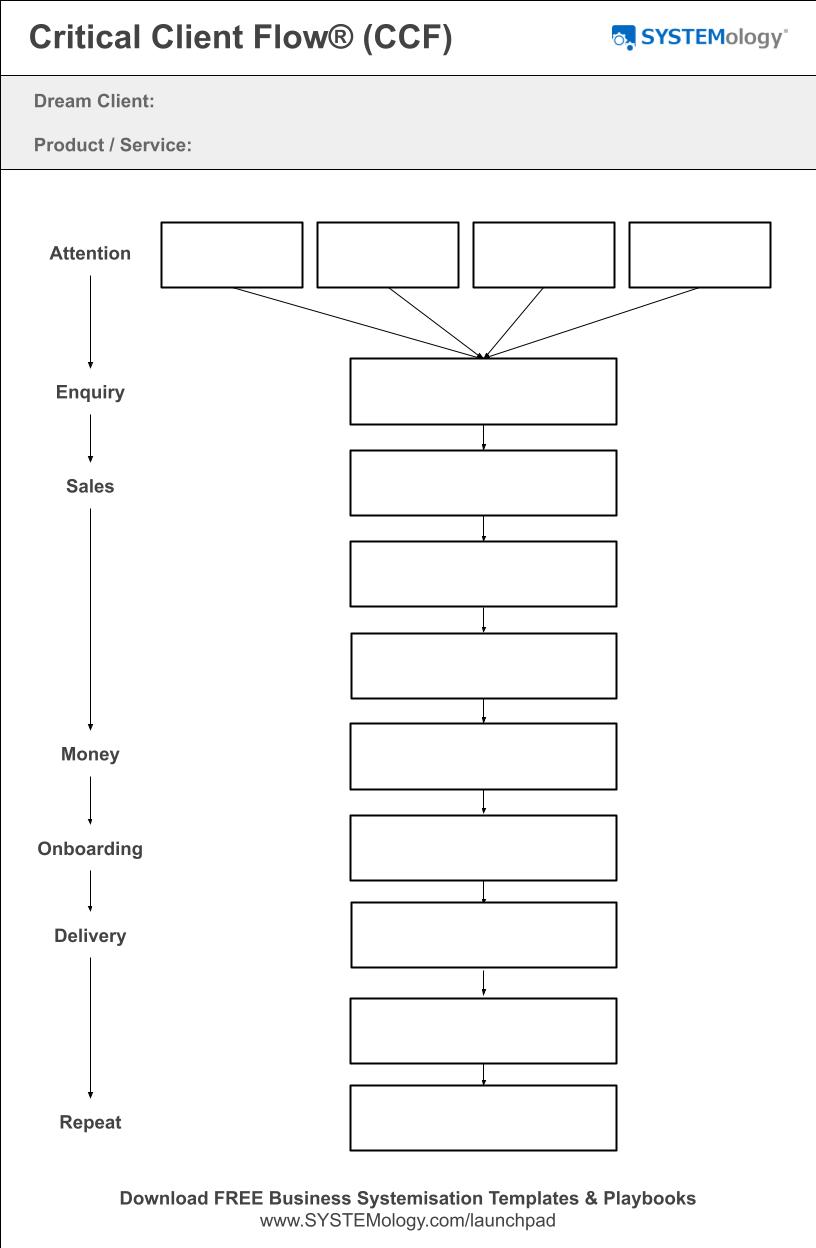
She used the SYSTEMology framework to document the business's Critical Client Flow: the core steps from a new dog owner's first enquiry through to ongoing care. She got her systems organised, stepped out of daily operations, and the business became highly profitable.
How profitable? PETstock, a major corporate buyer, acquired the business. The systems weren't just nice to have. They were what made the business a sellable asset.

Then there's Sandra, who ran Taking Care Mobile Massage. Everything was paper-based and lived in her head. When the pandemic hit, her daughter Abby stepped up as the Systems Champion, the person responsible for driving the documentation. Abby captured the key processes, got the team following them, and Sandra was able to exit daily operations entirely. The business is now scaling toward an exit.
Different industries. Same pattern. Document the systems. Get them out of the owner's head. Build a business that works without you.
Where to start (not "document everything")
This is where most business owners get overwhelmed. They think they need to document every single process. Hundreds of them.
You don't.
Start with your Critical Client Flow. That's the 10 to 15 steps that take someone from their first interaction with your business through to becoming a happy, repeat customer. It's the backbone of how your business delivers value.
Map that out. Then document the systems within it, starting with the ones causing the most pain.
And here's something important: you don't have to do this yourself. In fact, you probably shouldn't. Business owners are big-picture thinkers. The detail work of documentation is better suited to someone else on your team. Someone who loves structure and process. In SYSTEMology, we call this person the Systems Champion. And they no longer have to write every system from a blank page: the AI tools that write SOPs have got genuinely good at the first draft.
If you want to go deeper on that, I wrote an entire book about it: Systems Champion. It's a practical playbook for the person who will actually drive the systemisation in your business.
The bottom line
A business system is just a documented way of doing something so the result is consistent and doesn't depend on you.
You already have systems. They're just trapped in people's heads. The work is getting them out.
Start with your Critical Client Flow. Assign a Systems Champion. Document one system at a time.
Simple beats perfect. Always.
For the full picture of what makes systems actually stick over time, the Three Pillars framework (Documentation, Tools, Culture) is the next read. It shows why most system initiatives fail and how to build the ones that don't.
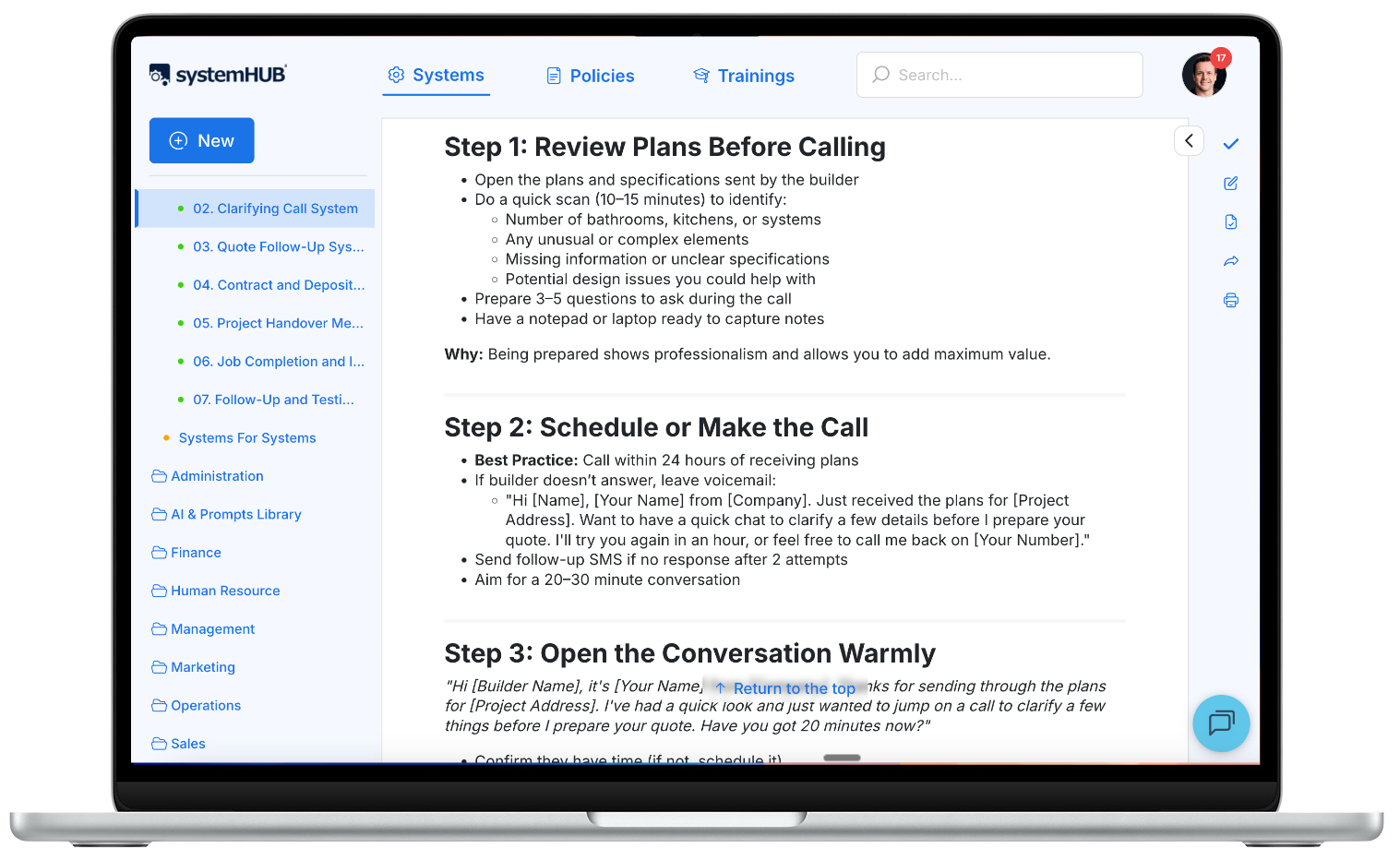
Ready to start building your business systems? systemHUB gives you a single place to build, store, and share every system in your business. It comes loaded with 100+ templates to get you started. Try it free.