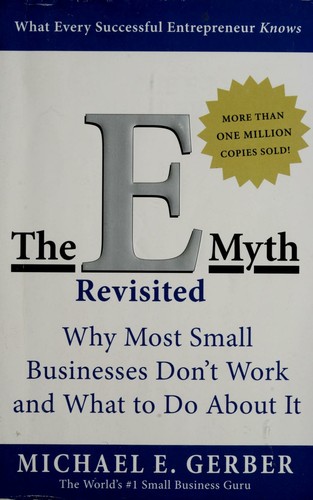
I've read The E-Myth Revisited more times than I can count. I've also sat on the phone with the man who wrote it. He wrote the foreword to my book. So this E-Myth Revisited review comes from someone who has stood on both sides of it.
I first read it while I was running Melbourne SEO Services. I was working 60 to 70 hours a week and holding a team together. I was the bottleneck for every decision and every fire. I found myself nodding all the way through the book. It felt like it was talking directly to me. It understood how I was feeling about running a business. It gave me some confidence and a direction to head. I underlined the good bits. Then I went back to work in my business.
The book convinced me completely that systems mattered. What it couldn't do was tell me what to do on Monday morning. That gap is what this review is about. If you've already read the book, jump to where to start.
E-Myth Revisited Review: The Short Version
Read it. It's still the clearest case anyone has made for working on your business instead of in it. It's less help on how to do that and it was written before the tools that make the how easy. Treat it as step one. Don't treat it as the whole plan.
The review in three lines:
- What it gets right: the technician trap, working on your business and the franchise prototype as a test for your business.
- What it misses: how to start, who should do the documenting and what thirty years of new tools have changed.
- Who should read it: any owner who is still working in the business all day and hasn't felt the case for systems land. Everyone else can skim it and move on to doing.
E-Myth Revisited Summary: What Does the Book Say?
The E-Myth Revisited is the updated edition of Michael E. Gerber's 1986 book The E-Myth. The "E" is for entrepreneur. The myth is that most small businesses are started by entrepreneurs. Gerber's point is that most are started by technicians: a baker, a plumber or a designer who is good at the work and decides to go out on their own.
He says every owner is three people in one. The Entrepreneur dreams and looks ahead. The Manager plans and keeps things in order. The Technician does the work. The trouble is that the Technician takes over. The owner ends up working in the business all day and calls it ownership.
His answer is to treat your business as a product. Build it as a prototype that could be copied, the way a franchise like McDonald's is copied. If a stranger can run it by following the pages you own a business. If it only runs when you're in the room you own a job.

The book finishes with a seven-step plan for designing the business, from your primary aim through to your systems strategy. It has sold more than five million copies.
If you only want the straight summary, there's a longer one on the systemHUB site: The E-Myth Explained: Meaning, Summary and How to Apply It.
What Are the Key Lessons of The E-Myth Revisited?
These are the five E-Myth key lessons I'd keep:
- Being good at the work doesn't make you good at running the business. This is the technician trap and it catches most owners.
- Work on your business as well as in it. Block out time for design and not only delivery. I wrote more on this in how to work on your business, not in it.
- Know which of the three people is missing. Most owners are strong Technicians with a weak Entrepreneur or Manager.
- Build the business as a prototype. Ask whether it could be repeated without you.
- Make systems the product. The system and not the person is what makes a business run the same way every time.
What Does the E-Myth Get Right?
A lot. I'll stick to the four I've seen hold up in real businesses, starting with mine.
The technician trap is real. I started as the person doing the work and I never stopped. Ten years later I was holding the whole business together myself. Every owner I meet describes the same shape. They're good at the thing they sell and trapped by it.
Working on the business is the only way out. What finally made me act was becoming a father. I didn't want to be the dad who was too busy to walk his son to school. So I spent about two years systemising the agency with Melissa. Then I stepped down as CEO and handed the role to her.
The franchise test is the best design rule in small business. Could a stranger run this by following the pages? I still ask that question. If the answer is no you've found your next system.
It passes the test when it counts. A week or two after we finished systemising the agency Michael's team called. The job was three months full time on his book launch. I've said it many times since: "There's no way that I could have gone to work full time on Michael Gerber's business for three months. Impossible. Unless we ran a systemized business." Melissa ran the agency while I was gone and it was fine. That's the E-Myth idea passing its test.
What Does The E-Myth Revisited Miss?
None of this is a criticism of Michael. He set out to change how owners think and he did it. But after years of watching owners read the book and then try to act on it I see three gaps.
It tells you why but not how. The book describes the destination in detail: an operations manual, a prototype, a system for everything. It leaves the route to you. I put it this way when I talk about it: it was written by a visionary for other visionaries. It sold the idea brilliantly. What it left open were the questions every owner asks next. What are the steps? Where do we get started? Which systems do we work on?
I read The E-Myth, Built to Sell, Scaling Up and Traction. Every one told me systems were the answer. None of them told me how to build them.
It reads as if the owner does the documenting. The book speaks to the owner as the designer and builder of everything. In practice the owner is the worst person to write the procedure. You're too close to it. You're too busy. And you're rarely the one who does the task best. What works is this: the person who already does it well records themselves doing it and a Systems Champion turns the recording into the document.
Michael gave me one piece of pushback after he read SYSTEMology and he was right. Don't let the owner off the hook. The owner doesn't write the systems. But the owner has to lead the effort and believe in it and follow the systems like everyone else. If the owner ignores the pages nobody else follows them. I changed how I teach it because of that.
It was written before the tools. The E-Myth Revisited came out in 1995. In that world an operations manual was a binder. Today someone can record their screen while they talk through a task and AI can turn the recording into a first draft in minutes. The ideas haven't aged. The method has changed completely. The old excuse that documenting is too slow doesn't hold any more.
The gap between the why and the how is what I built SYSTEMology to fill. I've made that case in full on the E-Myth Revisited alternative page so I won't repeat it here. For the longer view of where Gerber's work sits in the lineage, see Michael Gerber and Business Systems.
How Did Michael Gerber and I End Up Working Together?
In 2016 I got an email from someone called Luz Delia Gerber. It said two words: "Call me." She was Michael's wife. Michael was about to launch the last book in the E-Myth series and wanted someone to run it. I'd never met either of them.
That call became a three-month full-time book launch and a trip to Carlsbad. Years later Michael wrote the foreword to SYSTEMology. He wrote that I had "not only DONE it" but had written "the brilliant book to teach you exactly how to do it, too."
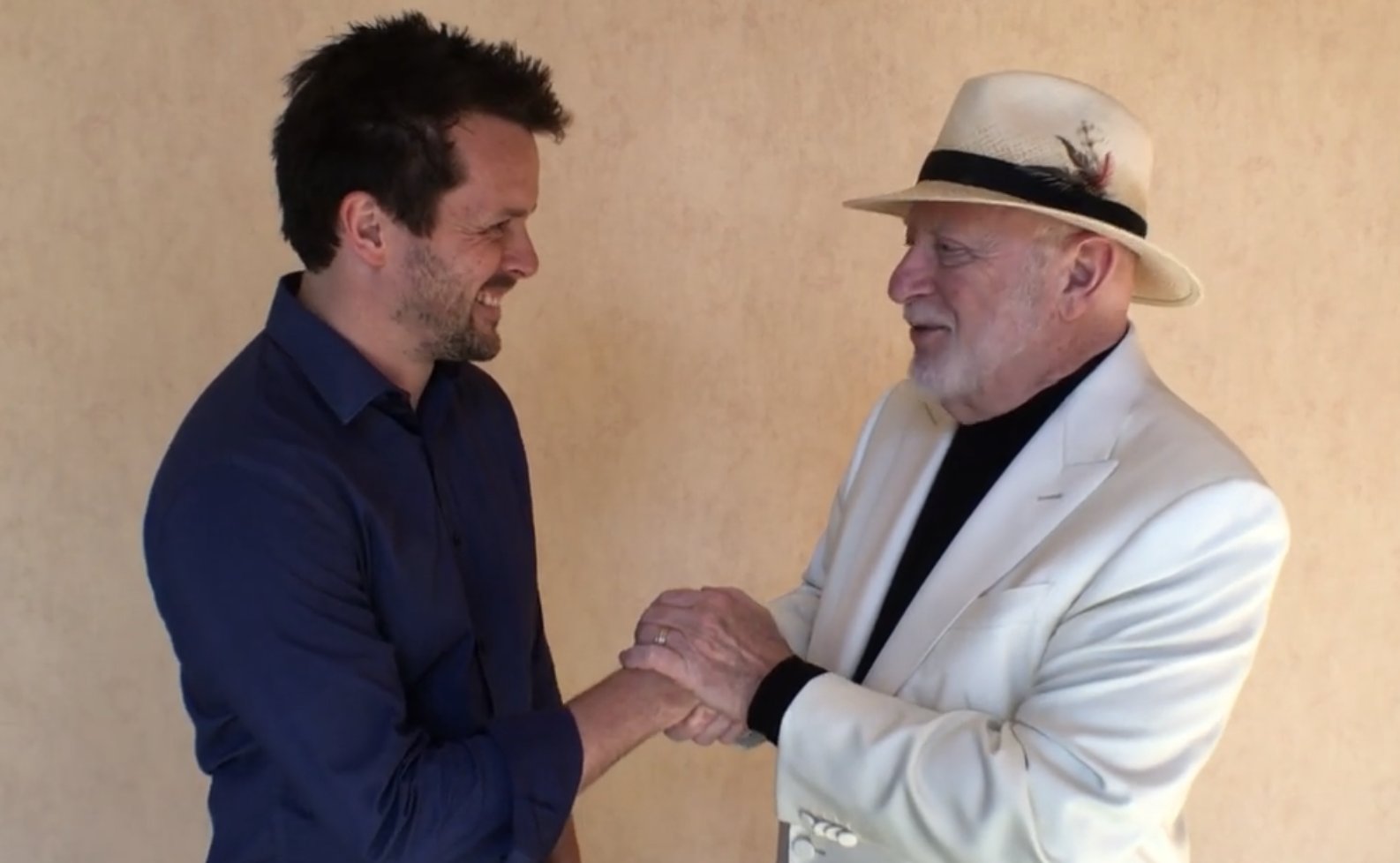
I've told the whole story, with the audio of that first call, on systemology.com: Michael E. Gerber and Me. I won't retell it here.

This is Michael talking about SYSTEMology in his own words:
Michael E. Gerber on SYSTEMology (2 minutes)
Who Should Read The E-Myth Revisited Today and in What Order?
Michael gave the order himself. Asked what a business owner should do, he said: "Step one, if you haven't read the E-Myth, get the E-Myth." Then: "Step two. Get SYSTEMology."
I'd put it a little more practically.
- Read it first if you're still working in the business all day and you've never felt the case for systems land. It will give you the words and the permission.
- Skim it if you already believe in systems. You don't need convincing. You need a starting point.
- Skip to the how if you've read it before and nothing changed. Reading it again won't help. Doing one system will.
Renee Kelly is a good example of the order working. She runs Lime Therapy, an allied health business in Mildura. She read The E-Myth first and SYSTEMology second. At first she thought she had to do it all herself. Once she appointed a Systems Champion the work moved. Invoicing and wage processing dropped from about a day to a couple of hours.
Where to Start
If you've read the book and nothing changed, don't read another one. Pick one system.
- Map your Critical Client Flow. Write down the steps a client goes through from first contact to repeat business. You'll end up with 10 to 15 core processes.
- Pick the one that causes the most pain. Ask the person who does it best to record themselves doing it.
- Turn the recording into a one-page procedure. Then ask someone who didn't write it to follow it. Where they stumble, fix the page.
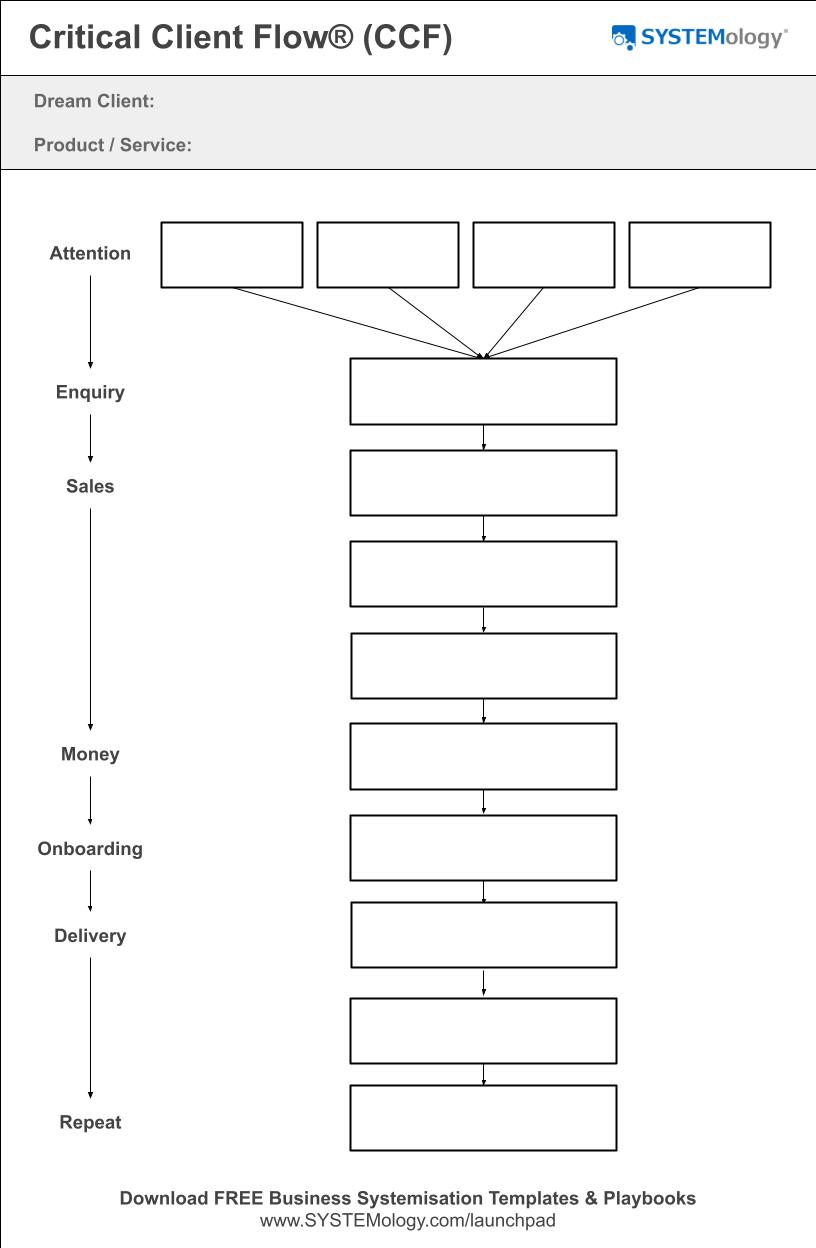
That's about a week of work. Do it ten times in 90 days and you'll have the systems that matter most. To see where you stand first, take the free Systems Strength Test or the Owner Dependency Score. When you're ready for the whole method, the SYSTEMology summary shows how it fits together and the book walks you through every stage.
This is my own review of the book. "E-Myth" is a trademark of its owner.