Customer loyalty is not built by big gestures.
It's built by small, repeatable acts that happen reliably across dozens of customer interactions over months and years. The business that sends a thoughtful note every time a customer's contract renews beats the business that runs an expensive annual customer appreciation event. The business that returns calls within two hours beats the one with the polished glossy newsletter.
Consistent small acts compound into loyalty. Inconsistent big gestures don't. Loyalty is a systems problem, not a marketing problem.
This article walks through ten specific, small, systemisable acts that build loyalty and profitability when they're done every time. Each one is cheap to install. Collectively they produce a business that customers genuinely want to buy from for years, which is the single most profitable thing a small business can be.
The 10 acts
1. Return every message within the same business day. Not 24 hours. Same business day. This one move separates you from 80% of your competitors. Customers interpret fast response as competence and care. Slow response, even when followed by excellent work, creates a layer of low-grade anxiety that erodes loyalty over time. Install a documented standard: every message gets a response (even if "received, will come back to you tomorrow") within the business day.
2. Use the customer's name and acknowledge their specifics. Not once. Every interaction. "Thanks Sarah, got it. I'll look at the Q3 numbers you mentioned and respond by Thursday." Small businesses run on names and specifics. Stripping them out of communication for efficiency is a false economy that erodes the relationship.
3. Send a proactive update when something changes on their account. Before they ask. If the delivery is delayed, they hear it from you first. If a team member involved in their work is changing, they hear it from you first. If a policy or price is changing, they hear it from you first. Proactive communication is the cheapest loyalty investment possible.
4. Remember something personal they mentioned. Not everything. One thing. "How did your daughter's school play go?" asked six months after they mentioned it in passing. Systemise this: every customer conversation logs one personal detail that can be referenced in the next one. The CRM field is called "personal notes." It's the most valuable loyalty asset a small business can build.
5. Fix the small things without making them ask twice. If a customer mentioned that the invoice format is confusing, fix the format and tell them it's fixed. If they mentioned that the delivery time is tight, offer a standing earlier slot. The friction that small businesses dismiss as "we should do that sometime" is exactly the friction that accumulates into churn. (This is the companion move to customer care as a business system, the small fixes are the operating system behind the relationship.)
6. Thank them for referrals, specifically and promptly. Not a canned "thanks for the referral." A specific, personal message: "I know John got in touch because of you. Thank you, it meant a lot. Here's what happened." Generic thank-yous feel worse than none. Specific ones get remembered and produce more referrals.
7. Celebrate their milestones, not just yours. Their five-year anniversary as a customer. Their business's expansion. Their team's major win. These matter to them. When you notice and acknowledge them, you become a small part of a story they tell.
8. Apologise properly when you mess up. No excuses, no "but", no soft-pedal. "We got this wrong. Here's what happened. Here's what we've changed so it doesn't happen again." The apology is the loyalty-moment most small businesses fumble. Done right, a good apology produces more loyalty than never messing up in the first place.
9. Make leaving easy. Long cancellation processes, friction to downgrade, hard-to-cancel subscriptions, these extract short-term revenue at the cost of every referral and every word-of-mouth conversation for the rest of the customer's life. Make leaving easy. You'll lose customers who were going to leave anyway, and you'll keep the reputation that produces future ones.
10. Ask them how you can help twice a year. Not "how's your experience", that's a survey. A direct, personal question: "What's on your mind right now, and how can we help?" Twice a year, five minutes, for your best customers. The answers build loyalty, surface upsell opportunities, and catch churn risks before they materialise.
Ten acts. Each small. Collectively transformative.
Luke Davies and Davies Construction's loyalty engine
Luke Davies runs Davies Construction, a custom home builder in regional Australia. Construction is a difficult category for customer loyalty because each project is typically a one-off; there's no subscription, no recurring revenue, no obvious reason for loyalty beyond a referral.
But the referral economy in regional construction is brutal. A builder who treats clients well produces a steady flow of referrals and can stay full for years without ever running a marketing campaign. A builder who treats clients transactionally starves because the local market remembers every story.
Luke's operation systemises several of the ten acts above, fast response standards, proactive update cadence, thank-you discipline on referrals, proper apologies when things go sideways (which they do on every custom build at some point). What this produces is a business that's been referral-dependent for most of its existence, in a category where referral dependence is considered risky, and has stayed booked solid while competitors with more marketing spend struggle.
The insight from Davies is: customer loyalty in a one-off service business is still worth systemising, because the referrals that loyalty produces are the entire marketing budget for businesses like this. Ten small systemised acts, applied across dozens of projects over years, compound into a reputation that markets the business for free.
How loyalty shows up on the P&L
Three channels.
Higher lifetime value. Loyal customers stay longer. In subscription businesses, that's mechanical, retention is the lifeblood. In one-off service businesses, it shows up as repeat purchases, add-on work, and longer active lifetimes.
Higher referral rate. Loyal customers tell their network. Referred customers close at higher rates, have lower CAC (roughly zero), and are more likely to become loyal themselves. A strong referral engine is usually the single most profitable growth channel in small business, and it depends entirely on systemised loyalty-building. (For the acquisition side of this flywheel, see how to systemise your marketing.)
Higher premium tolerance. Loyal customers are less price-sensitive. They've already made the trust investment and they know the value. A 5-10% price increase is absorbed by loyal customers where it would produce churn in transactional ones.
Collectively these channels typically add 20-40% to the economic value of a customer base for a business that systemises loyalty well versus one that doesn't. That compounds, over a decade the difference between loyal-customer-base and transactional-customer-base businesses in the same category is enormous.
The install sequence
You can't install all ten acts at once without the team feeling overwhelmed. Here's the sequence that works.
Month 1. Install acts 1, 2, 3, fast response, use of names, proactive updates. These are communication hygiene and affect every interaction.
Month 2. Install acts 4, 5, remembering personal details, fixing small frictions. These require updating the CRM or handoff template and creating a weekly "small fixes" review.
Month 3. Install acts 6, 7, thanking for referrals, celebrating customer milestones. These require data infrastructure (knowing when someone referred, tracking customer milestones) but run on autopilot after.
Month 4. Install act 8, proper apologies. This is a training-and-culture move more than a systems move. Document the apology standard. Coach the team on it.
Month 5. Install act 9, easy cancellation. This is a policy decision more than a systems decision. Audit every exit path. Remove unnecessary friction.
Month 6. Install act 10, twice-yearly "how can we help" calls. This is a calendared rhythm for your top customers.
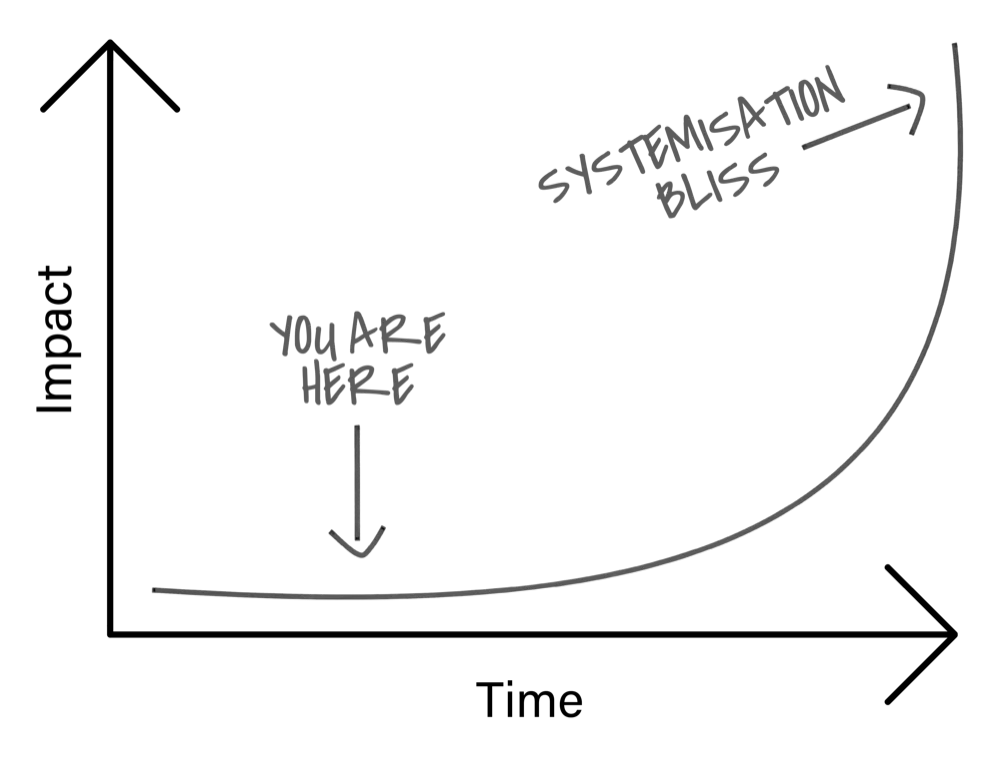
By month six, all ten acts are running. By month twelve, they're part of the culture and the team doesn't need reminders. By month thirty-six, the cumulative effect on the referral engine, retention, and premium pricing becomes visible on the P&L in a way that's hard to attribute to any single act, which is why loyalty systems are under-built. Their impact is systemic, long-running, and invisible to short-term thinking.
Your next move
Pick act one, fast same-day response. Install it this week. Document the standard. Brief the team. Measure it for a month.
That's the whole next move. Once it's running reliably, move to act two. Don't try to install all ten in a week; you'll do none of them well.
Loyalty is built on the reliable accumulation of small acts. The owner who installs one act a month for ten months ends up with a business that feels different to work with, different to hear about, different to recommend. That difference is the entire marketing moat.
Ready to put loyalty on rails? The Employee Replacement Calculator quantifies how much disengagement (team + customer) is costing you right now. For the full nine-dimension customer-systems audit, run the Systems Strength Test. Then set up the documentation and training standards with a systemHUB free trial.