Every small business says it's customer-centric. Very few actually are.
The gap isn't intent. Owners genuinely want to understand their customers. The gap is that "listening to customers" gets treated as an attitude instead of an operating system, a vague commitment to care, instead of a documented process with owners, rhythms, and follow-through.
A real voice-of-the-customer system has four specific components. Each one is cheap to install. Collectively they change the business. Most owners are running one of the four and calling it "customer focus," which is why customer experience keeps slipping in ways the leadership team doesn't see coming.
This article walks through all four, shows you what earns each one an "A" grade instead of a C, and how to install them without hiring a research agency or buying enterprise survey software.
Why "being customer-focused" isn't a system
Three things go wrong in small businesses that believe they're customer-focused.
First, the listening is informal. The owner hears from the loudest customers, and those customers are not representative. The quiet ones, who are the majority, and who churn silently, don't get heard.
Second, what's heard never gets to the team in a systematic way. The owner picks up a theme from a few conversations, mentions it to the team, and expects the theme to drive change. It almost never does.
Third, nothing closes the loop. Customer feedback goes in; a vague intention to improve comes out; six months later, the same feedback comes in again. The customer has told you twice. You've heard it twice. Nothing has changed. (This is one of the three business process errors that quietly drive customers away, and it's the one most owners never notice.)
A real voice-of-the-customer system fixes all three by making listening structured, team-visible, and closed-loop. Four components do the work.
The 4 components of a real voice-of-the-customer system
1. Structured listening. You need a documented way of hearing from a representative sample of your customers every month, not just the loud ones. That means a short survey with the same five questions sent monthly to every active customer, plus two to three 20-minute customer interviews per month with a cross-section (not just the happiest). Five questions, three interviews, that's it. Anything more elaborate never happens. Anything less produces unreliable signal. Earn an A here by making the listening unavoidable and repeatable, not occasional and dependent on mood.
2. Internal circulation. Everything the customer says needs to reach the team within 48 hours of being said. A shared channel, a weekly digest, a pinned customer-quotes document, any of these works. The goal is that nobody on the team is more than a week out of date on what customers are saying. Earn an A here by making the customer's voice present in every team meeting, not something the team hears about at quarterly offsites.
3. Triage with owners. Each piece of feedback needs to be sorted into one of three buckets: immediate fix (someone owns it this week), systemic issue (someone owns it this quarter), or noise (acknowledged, not actioned). Without this step, feedback overwhelms the team and nothing happens. Earn an A here by having a single person, usually the Systems Champion or operations lead, own the triage rhythm. 15 minutes a week, every week, non-negotiable.
4. Closed-loop follow-through. When a customer surfaces something that gets fixed, the customer needs to be told. "You raised this, we fixed it, here's what changed." The closed loop is what turns customers into advocates. Without it, customers assume nothing happens, and they stop bothering to tell you anything. Earn an A here by having a template response and a named owner for every resolved issue, takes 30 seconds, matters enormously.
Four components. Each one, installed, takes about a week. Collectively they transform customer experience in a quarter. Almost no small business runs all four. Most run one or two and wonder why they keep losing customers.
Gary McMahon and Ecosystem Solutions' customer-listening rhythm
Gary McMahon is the founder of Ecosystem Solutions, an Australian environmental consultancy doing bushfire management, ecological surveys, and land restoration work for government, developers, and private landowners. The business has grown from a single operator to a multi-million-dollar firm with dozens of technical staff across multiple states.
Environmental consulting is a trust-heavy, project-based business. Clients aren't buying a product, they're buying a report, often under regulatory pressure, often with tight deadlines. Small missteps in communication or scope can turn a happy client into a very unhappy one very fast. Gary's operation runs a systemised voice-of-the-customer process because in his industry, losing a client isn't just a revenue event, it's often a reputation event in a small professional community.
The system Ecosystem Solutions runs covers all four components in the list above. Structured listening: a post-project survey with five questions, sent on every engagement. Internal circulation: a weekly team digest with customer quotes. Triage: the operations lead owns the 15-minute weekly review. Closed-loop: every client who surfaces a real issue gets a personal follow-up with what changed. None of those moves are sophisticated. All of them are documented, owned, and running weekly.
The result over several years of running this system: a reputation in the industry for being the firm that actually listens and actually changes, which drives a referral engine most competitors can't match. Not because the team cares more. Because the team has a system that makes caring visible and reliable.
What earns each component an "A"
Let me sharpen what separates the A-grade version of each component from the C-grade version.
Structured listening, A grade means the same five questions get asked of every active customer every month (survey) plus three interviews a month with a rotating cross-section. C grade is "we ask for feedback when we remember" and/or "we only hear from the loud complainers."
Internal circulation, A grade means customer quotes appear in the shared team channel within 48 hours, a weekly digest summarises the themes, and every team meeting starts with what customers are saying. C grade is "the owner relays highlights to the leadership team every few weeks."
Triage, A grade means every single piece of feedback gets sorted, owned, and scheduled, with a 15-minute weekly review that's never skipped. C grade is "we discuss feedback when it comes up in meetings" and most items fall through.
Closed-loop, A grade means every customer whose feedback led to a change gets a personal message explaining what changed. C grade is "we fix things quietly and hope the customer notices."
The difference between A and C isn't effort. It's rhythm and ownership. The A-grade version runs on autopilot because it's installed into the operating cadence. The C-grade version runs on the owner's memory and care, which means it runs intermittently.
The 30-day install plan
Here's how to install all four components in a month without taking anyone off their day job.
Week 1. Design the five-question monthly survey. Keep it to five minutes to complete. Send it to every active customer. Set up a shared team channel or doc for incoming feedback.
Week 2. Book three 20-minute customer interviews. Pick a spread, one happy customer, one neutral, one recently-churned if possible. Record them with permission. Share key quotes with the team.
Week 3. Start the weekly triage meeting. 15 minutes, same time, same person leading. Sort every piece of feedback into immediate / systemic / noise. Assign owners for the immediate and systemic buckets.
Week 4. Start the closed-loop practice. Every customer whose feedback led to a change this week gets a personal 2-sentence message: you said, we did, here's what's different.
At the end of week 4, you have all four components running. The first cycle will be messy. By month three, it's the operating rhythm. By month six, customers start mentioning they've noticed, the moment the system starts producing referrals.
Putting it to work
Pick one customer this week. Not a loud one. Not a recent complainer. A quiet, steady one you haven't spoken to in six months. Call them. Twenty minutes, three questions: what's working, what's not, what would make this better.
That call is the first structured listening data point. Write it up. Share it with the team. That's component one, installed on day one.
The other three components follow the same pattern: one small, committed move that you then systemise into a weekly rhythm. Don't try to install all four in a day. Install one this week. Install the next one next week. In a month, the system is running. In a quarter, it's invisible and unstoppable.
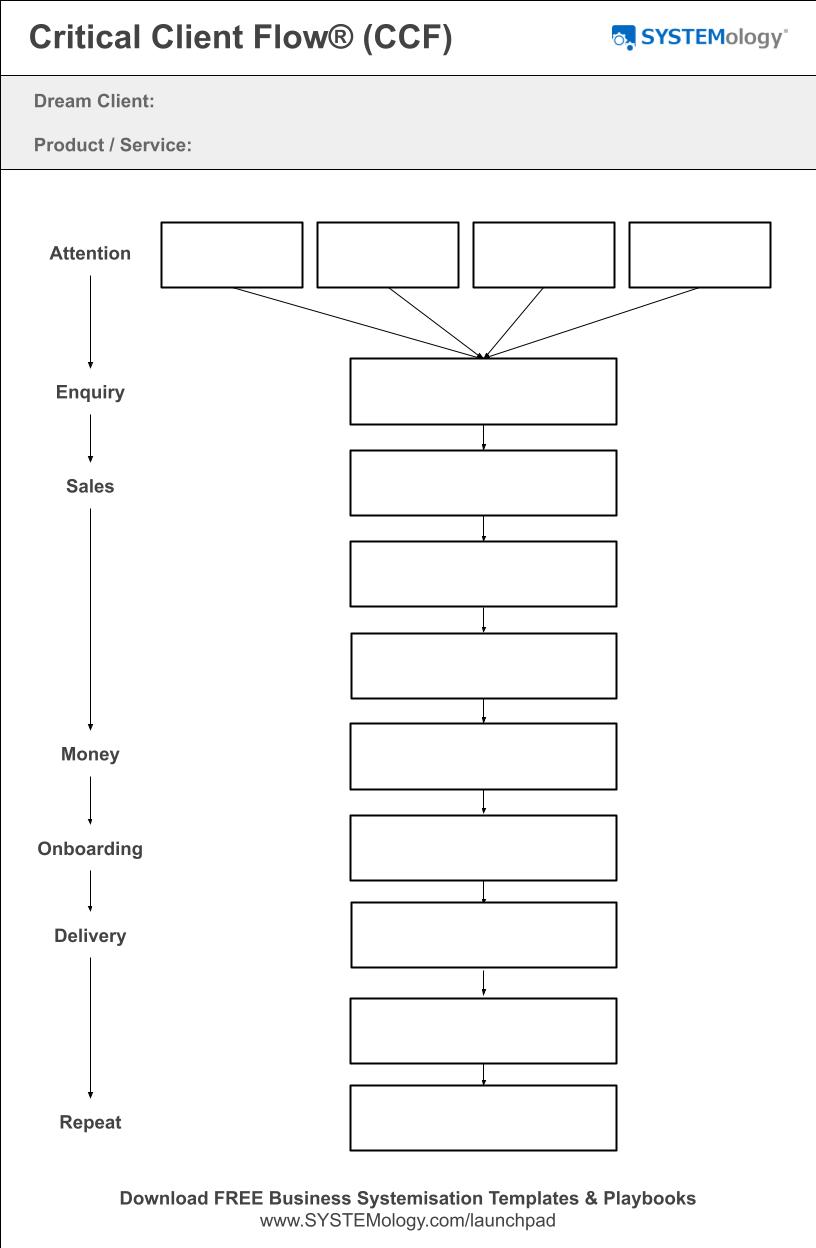
Ready to hear the real voice of your customers? Start with the Systems Strength Test to see which dimension of your customer system is weakest right now. If you haven't drawn a Critical Client Flow yet, that's the prerequisite, the CCF shows you every touchpoint your voice-of-the-customer system needs to cover. Then put the weekly rhythm on rails with a systemHUB free trial.